


CleanBoost - Junk Cleaner
Fadilo Studio
I installed CleanBoost - Junk Cleaner to see whether its straightforward promise holds up in everyday use. Developed by Fadilo Studio, this free Android tools app is aimed at one practical job: helping you clear unwanted files and recover storage space without turning the process into a complicated maintenance routine. My overall impression is that it is easiest to appreciate when your phone is getting crowded and you want a simple place to start, rather than when you are looking for a complete device-management suite.
The app has a 3.6 average from around 12 thousand ratings, with more than 5 million installs. Those figures suggest that it has reached a sizeable audience, although the rating also tells me to keep expectations realistic. CleanBoost is not the sort of utility I would install expecting dramatic improvements in every aspect of a phone. Its value is more specific: it gives storage cleanup a dedicated, lightweight workflow that can be easier to approach than searching through several system menus.
How CleanBoost fits into a real storage-cleaning routine
A simple starting point for a crowded phone
The first thing I noticed about the app’s identity is how narrowly it is positioned. It is not presented as a social app, a backup tool, or a file-editing platform. It belongs to the tools category and concentrates on junk files and device storage. That focus matters because storage problems are often less about wanting another feature and more about wanting a clear next step.
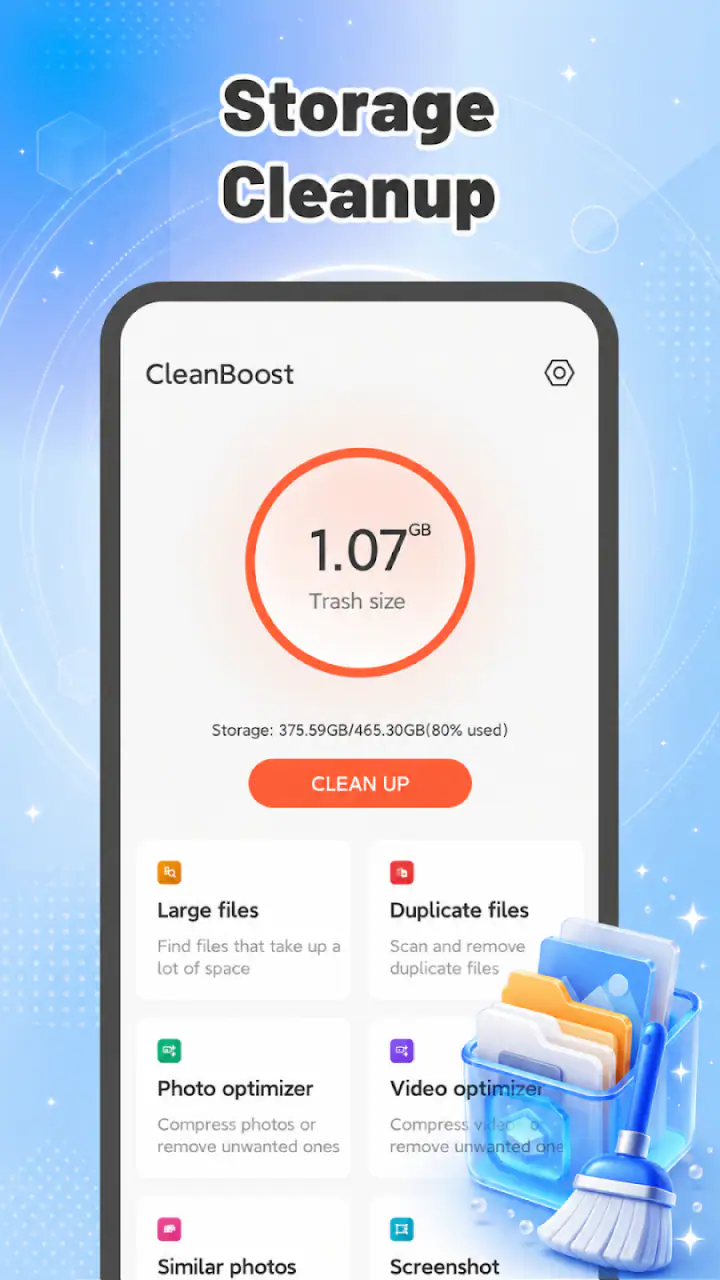
When a phone begins showing low-storage warnings, many people do not know which folders are safe to inspect. They may also postpone cleanup because manually reviewing downloads, temporary files, and old media takes time. CleanBoost is useful in that moment because it frames the task as a cleanup session instead of asking the user to understand the entire file system first.
I would use it after a period of heavy phone use: downloading documents, receiving images in messaging conversations, installing and removing apps, or saving media for offline access. The sensible workflow is to open the cleaner, review what it identifies, and treat deletion as a decision rather than an automatic reflex. That last part is important. A cleaner can make unwanted files easier to find, but the user still needs to recognize anything personal or still needed.
Latest News

Uber Eats Under Pressure: What Happens When Delivery Goes Wrong

How QR & Barcode Scanner Adapts to Android and iOS Innovations

Why Waze Navigation & Live Traffic Is Your Essential Travel Companion

CapCut Mastery: Unleash Hidden Features for Pro-Level Editing

How OS Updates Enhance Roblox Adventures

Teacher Simulator: Exam Time Turns Quick Classroom Judgments into a Repetitive Loop
What “free” means for the decision
CleanBoost is free to use, so the initial cost is not a barrier. That makes testing it fairly easy: someone with a nearly full phone can try the cleanup process without committing money to a subscription or purchase. In value terms, the app’s strongest advantage is therefore access. You can judge its usefulness on your own device rather than paying first and hoping it solves the problem.
I would still separate free access from guaranteed results. The app can offer a convenient route into storage cleanup, but the amount of space recovered depends on what is actually present on a particular phone. A device that is full of large videos will need a different kind of review from one filled with temporary leftovers. CleanBoost should be viewed as a practical inspection and cleanup aid, not as a promise that every crowded device will suddenly have plenty of room.
There is also a useful distinction between saving money and saving time. Android already includes storage-management tools, so a user can often inspect storage without installing another app. CleanBoost earns its place when its focused presentation makes the process faster or less intimidating for that person. If the built-in tools already show exactly what needs removing, the free app may add convenience rather than a completely new capability.
Gallery
My everyday scenario: preparing for a trip
A realistic use case is preparing a phone before travel. I might need room for offline maps, photos, tickets, and entertainment, but I may not want to spend an evening opening every folder. In that situation, I would run CleanBoost before leaving, inspect its cleanup suggestions, and then separately review large personal files such as old videos or duplicate-looking images. The app can help with the first pass, while personal media still deserves human judgment.
This workflow also avoids a common mistake: deleting files simply because they look unfamiliar. Before confirming a cleanup, I would check whether an item belongs to a document, an active project, or an app I still use. I would also avoid treating a newly freed space figure as permission to stop organizing altogether. If the same downloads and media continue accumulating, the phone will eventually need another review.
Useful habits that make the app safer
One non-obvious benefit of a focused cleaner is that it can encourage a repeatable habit. Instead of waiting for a severe storage warning, I would use it after a large download session or after removing several apps. That makes each cleanup smaller and easier to verify. Smaller sessions reduce the chance of selecting something important in a rushed, all-at-once deletion.
I would also use the app as a discovery tool rather than assuming every suggested item is disposable. If the scan reveals that the real problem is personal media, the correct next step may be moving files elsewhere or deleting them manually. If it reveals mostly temporary material, the cleaner is a better match. This distinction is more useful than judging the app only by how much space it claims to find.
Another practical tip is to keep a short mental record of what you chose to remove. If an app behaves differently afterward, you can connect the change to the cleanup instead of guessing. That is particularly sensible with any utility that works around stored files. A lightweight interface may make cleanup feel harmless, but storage decisions can still affect offline content and saved work.
Where it is more convenient than the usual alternative
The usual alternative is Android’s own storage screen, sometimes combined with a file manager. Those tools can be more transparent for experienced users because they expose categories and folders directly. They are also a good choice when you want to inspect a specific file before removing it. CleanBoost is more appealing when you want a dedicated cleaning flow and do not want to navigate through system settings first.
Compared with a full file manager, the app’s narrow purpose can be an advantage for beginners. A file manager may present many folders without explaining which ones deserve attention. A cleaner can feel less demanding because the task is framed around reclaiming space. The trade-off is control: anyone who wants detailed folder-level organization, manual transfers, renaming, or archiving will likely be better served by a file manager.
Compared with broader “phone booster” utilities, CleanBoost’s storage focus is easier to understand. I would be cautious about installing any cleaner mainly for vague promises about speed or battery life. The clear reason to use this app is storage housekeeping. If your goal is performance diagnosis, battery analysis, backup, or privacy auditing, a specialized system tool is likely a better fit.
Important trade-offs before deleting anything
The biggest trade-off is convenience versus control. A focused cleanup app can shorten the path from “my phone is full” to “I found possible clutter,” but that shorter path makes careful review even more important. I would never confirm a broad cleanup while distracted, and I would not use it immediately before an important deadline unless I had time to check the results afterward.
There is also a limit to what junk cleaning can accomplish. Large photos, videos, music files, and downloaded documents are often the main reason a phone is full, yet they are not necessarily junk. Removing them may free more space than clearing temporary material, but it can also remove things you want. CleanBoost is most comfortable as the first filter, not the sole answer to every storage problem.
The rating of 3.6 is another reason I would approach it as a useful option rather than an unquestionable recommendation. It has a broad user base, but the mixed average indicates that experiences are not uniformly excellent. That could reflect different phone setups, different expectations, or different opinions about how much a cleaner should do. I would try it on a non-critical cleanup task first and decide whether its workflow suits me.
Device compatibility is reasonably broad: the current version is 1.0.3 and it supports Android 8.0 or later. That makes it relevant to people using older supported phones as well as newer devices. Still, compatibility alone does not guarantee identical behavior across every manufacturer’s storage system. Android interfaces and file arrangements can vary, so I would judge the app by what it identifies on my own phone rather than assuming another user will see the same results.
Who is likely to get the most value?
I think CleanBoost is best for someone who wants a low-friction storage check. That includes people who are uncomfortable browsing system folders, users who repeatedly receive downloaded media, and anyone who prefers a dedicated utility over a settings menu. It can also suit a family member who needs a simple routine for dealing with a nearly full phone, provided someone explains the importance of reviewing items before deletion.
It is less compelling for an experienced Android user who already has a reliable file-management system. If you regularly sort downloads, move photos, remove unused apps, and inspect storage categories yourself, another cleaner may not change much. The free price makes trying it harmless from a purchase perspective, but installing an app still adds another step to your phone routine, so convenience needs to be real rather than theoretical.
I would also skip it as the main solution if the storage issue comes from a large personal library. In that case, the better answer may be transferring photos and videos, changing download habits, or removing offline content from the apps that created it. CleanBoost can still help identify clutter around the edges, but it should not replace a proper media-management plan.
Privacy and deletion judgment in daily use
With any cleaner, my standard is simple: I want to understand what is being selected before I confirm. I would read each category or result label carefully, look for anything tied to active work, and avoid bulk actions when the phone contains important files. If I were cleaning a shared or work device, I would be even more conservative because a seemingly unimportant download could belong to someone else.
I would also make a habit of checking the phone afterward. Confirm that the expected storage space was recovered, open the apps that matter, and make sure offline files or documents you still need remain available. This is not a criticism unique to CleanBoost; it is the basic discipline that makes any cleanup tool safer. The app can simplify discovery, but it cannot know the personal value of every file.
Version, age suitability, and practical expectations
The app is marked for Everyone, which makes its intended audience broad. In practice, I would still introduce it to less experienced users with a short explanation: a cleaner is not a magic “make my phone fast” button, and a suggested file is not automatically worthless. That guidance matters more than the age label when the device contains family photos, schoolwork, or important documents.
Because the current release is 1.0.3, I would keep my expectations measured. A focused utility can be perfectly useful without a long feature list, but I would not assume it has the maturity or depth of every established file-management solution. My preferred approach is to start with a small, reversible-feeling cleanup session, observe how clearly the app presents its findings, and then decide whether it deserves a regular place on the phone.
My buy-or-skip verdict
There is no purchase decision to make here because CleanBoost is free. The real question is whether its focused workflow saves enough effort compared with Android’s built-in storage tools. For a phone that feels cluttered and a user who wants a simple first pass, I think it is worth trying. Its purpose is clear, its supported Android range is useful, and its large install base shows that it has become a familiar option for many people.
I would recommend it to a friend with one condition: review before deleting. Use it to locate likely clutter, then handle personal media and important documents separately. That approach takes advantage of the app’s convenience without handing over every storage decision to an automated cleanup process.
I would skip it if I already had a good file manager routine, if my main problem was photos and videos, or if I wanted a broader device-maintenance tool. In those cases, the built-in Android controls or a dedicated file-management and backup workflow may offer better control. For everyone else, the best value of CleanBoost is its free, focused starting point for storage housekeeping, not an expectation of dramatic performance changes.
My final view is cautiously positive. CleanBoost - Junk Cleaner makes sense as a lightweight tool for finding possible storage clutter, especially when a crowded phone has become difficult to manage manually. It is not a substitute for organizing valuable files, and the middling average rating keeps me from calling it essential. But if you want a no-cost way to begin a careful cleanup on a compatible Android phone, it is a reasonable app to test and judge through your own everyday workflow.
FAQs for CleanBoost - Junk Cleaner
What is CleanBoost - Junk Cleaner used for?
CleanBoost - Junk Cleaner is designed to help identify and remove unnecessary files that may occupy storage space on an Android device. Depending on the version and device, it may scan temporary files, cached data, leftover installation files, duplicate items, or other categories selected by the user. It is mainly intended as a storage-management tool, not as a guaranteed performance booster for every phone.
Is CleanBoost - Junk Cleaner safe to use?
The application can generally be used safely when its scan results are reviewed before anything is deleted. Junk-cleaning tools may sometimes classify files as unnecessary even though a user still wants to keep them, so it is important to check the categories and deselect anything personal or important. Downloading the app from an official store and reviewing requested permissions is also recommended.
Can CleanBoost - Junk Cleaner improve my phone’s performance?
CleanBoost - Junk Cleaner may help when a device is running low on storage, because removing unwanted files can create additional free space and make everyday management easier. However, it cannot fix every cause of slow performance. Problems related to an aging battery, limited RAM, outdated software, overheating, or demanding applications may remain even after a cleanup.
Does CleanBoost - Junk Cleaner delete photos, videos, or personal files?
The app should not automatically be assumed to protect every personal file simply because it is labeled as a cleaner. Before confirming a cleanup, carefully inspect the scan results, especially sections involving large files, duplicate media, downloads, or messaging-app folders. Keep backups of important photos, videos, documents, and recordings, and only remove items you are certain you no longer need.
Is CleanBoost - Junk Cleaner free to download and use?
Availability of features may depend on the specific version installed, the developer’s current pricing model, and the user’s region. The app may offer basic scanning or cleaning at no cost while presenting advertisements, optional upgrades, or premium tools. Before starting a trial or subscription, check the store listing for in-app purchases, renewal terms, and cancellation instructions.
Pros
- Quickly identifies cache
- residual files
- and other removable clutter.
- Simple interface makes routine phone cleaning easy for beginners.
- Can help free storage space without requiring technical knowledge.
- Useful battery and memory information is available in one place.
- Cleaning results are presented clearly before files are removed.
Cons
- Some recommended files may require careful review before deletion.
- Cleaning performance depends on Android storage permissions and device model.
- Frequent notifications can make the app feel more intrusive.
- Extra tools or features may be limited behind in-app purchases.
- It cannot replace uninstalling unused apps or managing large personal files.


